Road marking is one of those things that disappears when it's done right — drivers follow the lanes, pedestrians use the crossings, and traffic flows. But behind every crisp white line on a Qatari road is a deliberate materials and application decision. In Qatar, that decision almost always leads to thermoplastic.
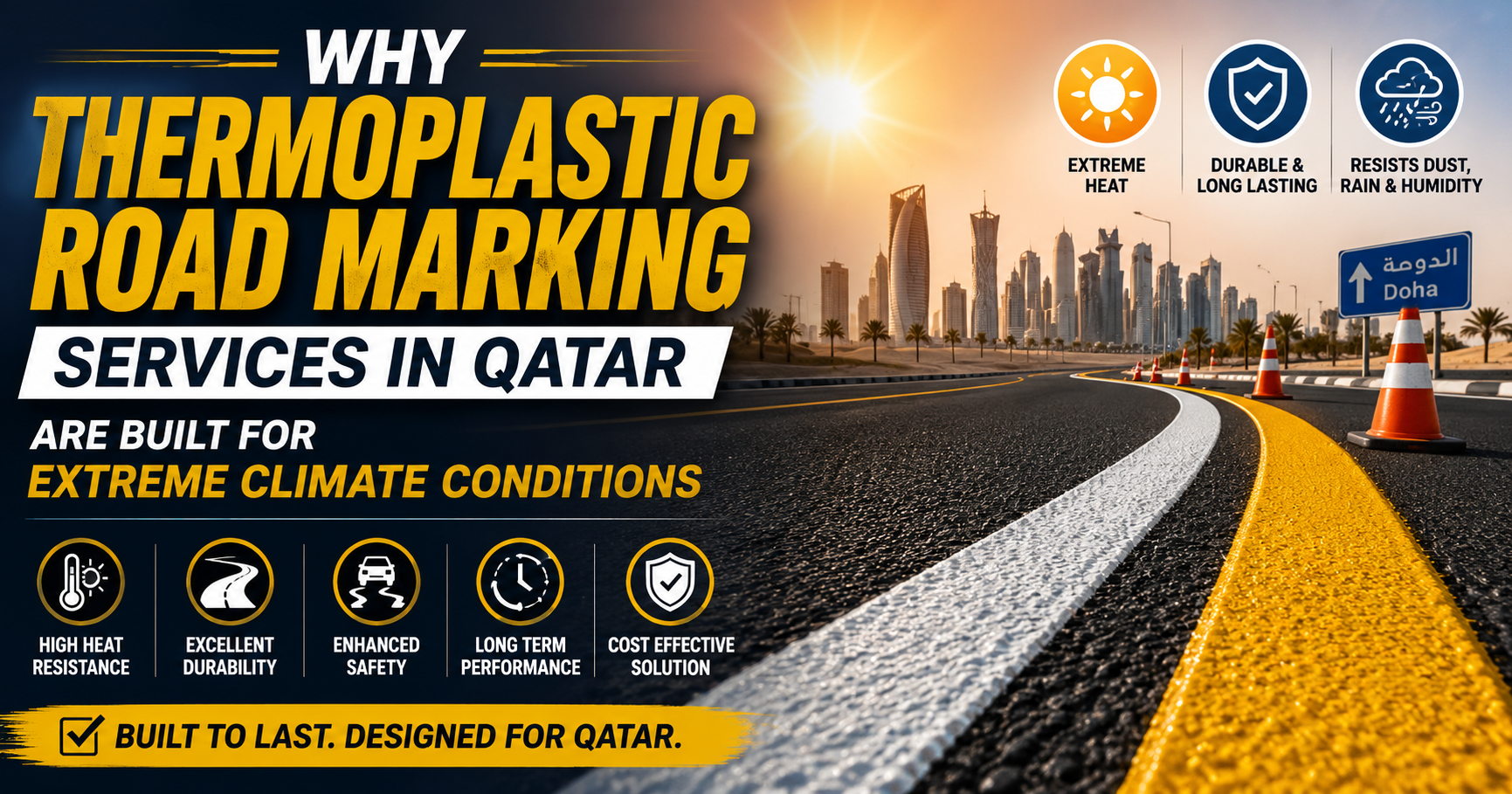
Thermoplastic road marking paint is a solid material that is heated to around 180–200°C and applied directly onto the road surface using specialised machinery. As it cools, it fuses with the pavement and creates a marking that is far more durable than conventional cold paint. The compound typically contains synthetic resin, pigments, filler materials, and — critically — glass beads, which give markings their night-time reflectivity.
Qatar's climate presents unique challenges for road infrastructure. Summer road surface temperatures regularly exceed 60°C, and the combination of heat, UV radiation, and heavy vehicle traffic degrades cold-paint markings rapidly. Thermoplastic markings handle these conditions significantly better, with typical service lives of 3–7 years depending on traffic volume and maintenance.
There is also a compliance factor. Road marking work in Qatar is governed by the Qatar Traffic Control Manual (QTCM) and the Qatar Construction Standards 2014 (QCS). Both documents specify performance requirements — including skid resistance, retroreflectivity, and daylight luminance — that thermoplastic materials reliably meet.
Thermoplastic is used for virtually every category of road marking in Qatar:
There are two main application methods. Hot melt thermoplastic (the standard approach) is applied using a screed box or extrusion machine at high temperature. Cold plastic is a two-component material applied at ambient temperature — it offers even longer service life and superior skid resistance, making it the preferred choice for high-stress locations like junctions and pedestrian crossings.
When selecting a contractor, look for alignment with QTCM and QCS standards, experience across both municipal and private sector projects, and the right equipment — a self-propelled line marking machine with computerised line/space control ensures consistent line widths and spacing, which matters both for compliance and for appearance.
Road Marking Qatar has delivered thermoplastic road marking projects across Doha and the wider Qatar municipality, working to the full requirements of QTCM and QCS. For a quote or consultation, contact our team directly.

Gate No: 154, Street No: 24,
Doha, Qatar